
Creative Walking Challenge Ideas for Enhanced Mindfulness
Walking challenges offer a playful twist to your routine while keeping the mindfulness game strong. These challenges add variety and fun, encouraging both physical health and mental clarity. They can be as simple or as complex as you like, tailored to motivate and inspire you.
One idea is to set a distance goal, either daily or weekly. Covering a specific distance encourages consistency and helps you track progress. It’s satisfying watching your efforts add up, and it builds a steady habit, keeping you engaged with your mindfulness practice.
Theme-based walks can spice things up too. Assign themes like ‘nature watch’, more like connecting with nature or ‘gratitude walk‘, where you focus specifically on spotting natural beauty or reflecting on things you’re thankful for. These themes steer your awareness and make the experience richer and more intentional.
Incorporating variations can keep challenges engaging. Mix up your routes, try different terrains, or explore new neighborhoods. Sometimes the unfamiliar makes you more alert and mindful because everything is fresh and interesting.
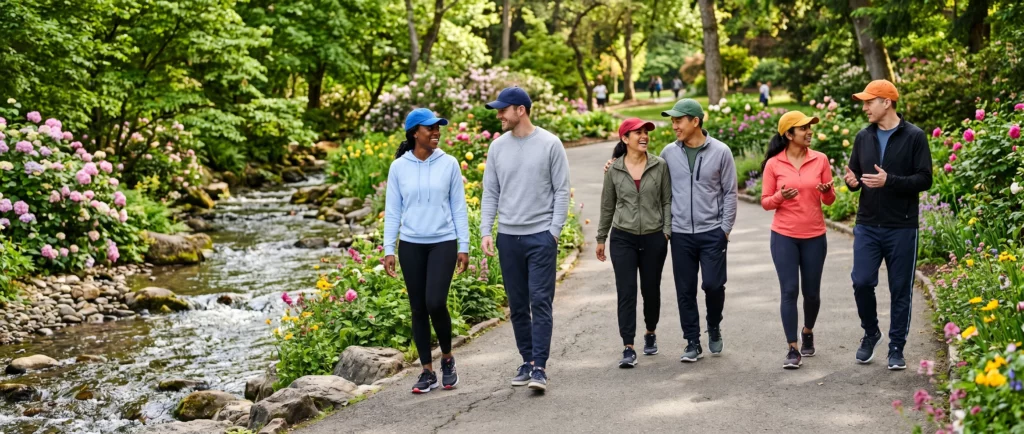
Don’t overlook the community aspect of walking challenges. Join a local walking group or create a friendly competition with friends or family. Social challenges can boost motivation and provide encouragement, making each walk something to look forward to.
These challenges not only infuse fun into walks but also encourage staying present, making every step a conscious and rewarding act.
Reflections with the 5 R’s of Mindfulness
As you finish walking, reflections through the 5 R’s add depth to your practice; Recognize, Respond, Release, Reconnect and Reflect.

Let’s start with Recognize. Here, you simply observe your thoughts, feelings and bodily sensations without trying to change them. This open acknowledgment can foster a better understanding of yourself. It could be as simple as feeling a tight muscle.
The next step is Respond. After recognizing what’s present, determine how to engage with it. If you’re feeIing tension somewhere, respond by adjusting your pace, posture, or breath. Responsiveness here cultivates flexibility and adaptability.
Release is about setting free what doesn’t serve you. It might be a lingering thought or an emotion that’s stuck with you from your day at work or meeting with family. Imagine it drifting away with each step, leaving you lighter and free.
Reconnect with yourself and your environment. Tune back into your surroundings and check in with how your body feels after the walk. Notice the shifts in your mood or energy, allowing these observations to ground you in your present state.
Finally, Reflect. After the walk, take a moment to look back on the journey. Think about what you discovered about yourself or your environment. What worked for you? Anything you’d share with a friend? This reflection enriches future experiences, making every walk a part of your growth journey.
Embracing the 5 R’s allows mindful walking to be more than just an exercise — it becomes a personal narrative where every step tells a part of your story.
How to Practice Mindfulness When Walking
Mindful walking’s about tuning into your walk completely. It can start with taking a moment to physically prepare. Think about your body. Feel the snug fit of your shoes, notice your posture and take a deep breath before you begin. It sets the stage for being fully present on your journey.
Staying focused while walking involves some tricks. First off, pay attention to each step. Feel your heel hitting the ground, the shift of your weight as you move forward and how your foot lifts for the next step. This focus helps anchor your thoughts and keeps distractions at bay.
Mindful walking can blend into any daily routine. Maybe it’s a short stroll around your block during a lunch break or a peaceful retreat in a nearby park. Use all your senses; feel the breeze, notice the colors around you and listen to the sounds. It’s surprising how much you’ll notice when you’re really paying attention.
Distractions will pop up, no doubt about it. That’s where mindfulness shines. When your mind wanders off or an external interruption occurs, gently shift your focus back to your walking rhythm without judgment or frustration. This practice strengthens your ability to stay present, which is useful even beyond your walks.
“I need to be transparent about this. As an Amazon Affiliate, I earn from qualifying purchases. Don’t worry, there’s no extra cost to you. It’s a simple way you can support my mission to bring you quality mindfulness content.”
I liked how this article connects mindfulness with something as simple and accessible as walking. A lot of people struggle to sit still for meditation, so mindful walking seems like a more natural way to slow down and become more aware of the present moment. It also feels like a healthy habit that can benefit both mental and physical well-being at the same time.
Do you think setting small walking challenges each week helps people stay more motivated and mindful over the long term?
Hi Monica. Listen, starting small is always the best way to go. People who are suffering depression find it difficult to be still and focus. So setting small tasks that are not challenging is good. What i would do when i started mindful walking was, I walked with my daughters. We would use the time to reflect on our journey prior to our leaving our home. Before i knew it, I was used to walking such that when schools resume I do it on my own and it’s amazing. So, start small and if you have someone to keep you company, all the better.